Final Cut on a Wedding Street Corner: Everyone’s Got an Opinion
After a U.S. shooting is picked apart frame-by-frame, Wedding residents unveil their own forensic cinema: 11 angles, 0 context, and one guy yelling “ENHANCE” at reality.
Street Footage & Public Paranoia Correspondent
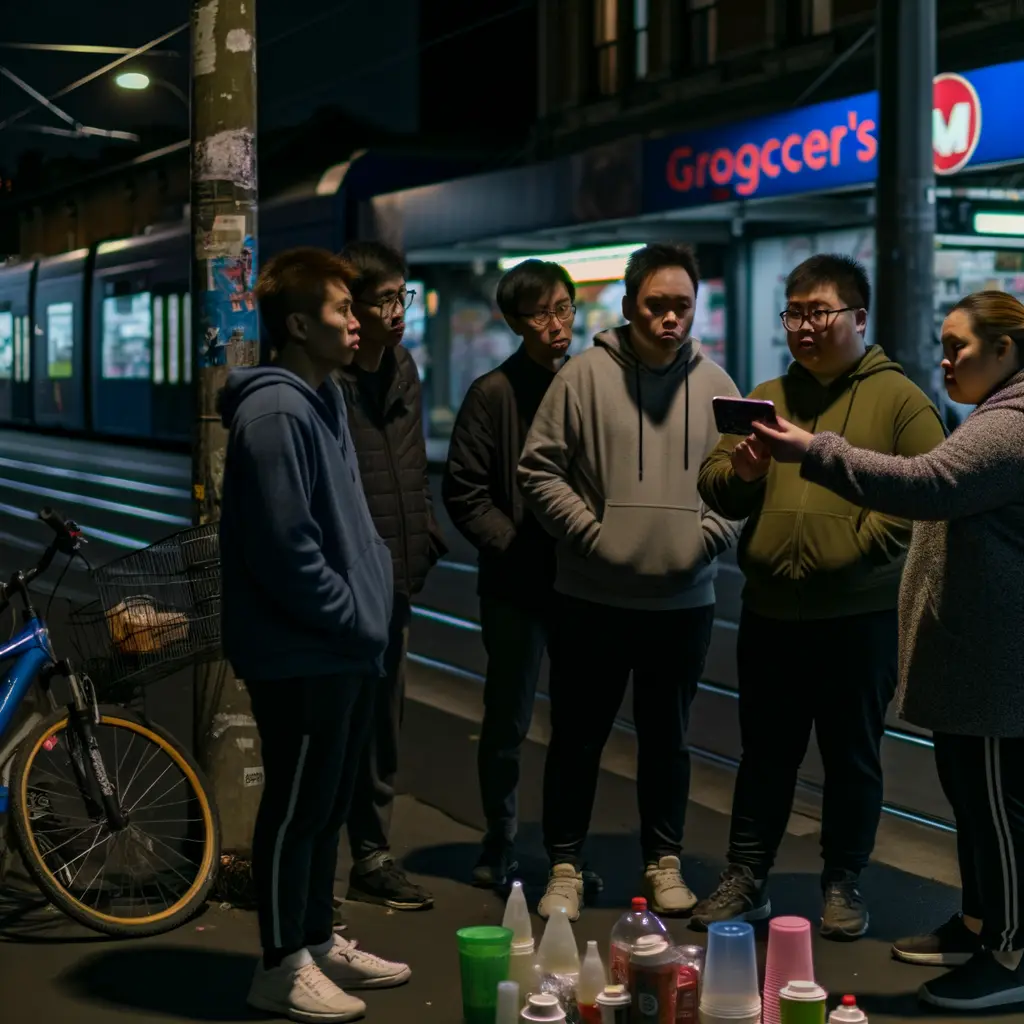
A contested moment used to be something philosophical—like whether your downstairs neighbor is playing techno or merely power-washing the concept of sleep.
Now it’s apparently a civic sport.
After American newsrooms did the whole sacred ritual—take a terrible, chaotic incident involving law enforcement, then run it through video analysis until reality turns into a PDF—Wedding has decided it deserves its own version. Naturally, ours is cheaper, louder, and comes with worse lighting.
Welcome to the Wedding Institute for Frame-By-Frame Morality
On Tuesday night, outside a bakery that smells like childhood and regret, a small confrontation happened. Nothing cinematic—just the usual Berlin ingredients: one confused tourist, one local who’s “not mad, just disappointed,” and a passerby filming vertically as if God personally asked for the least usable format.
Within ten minutes, the block produced:
- three different camera angles, all shaking like found footage from a doomed indie film
- one security clip from a Turkish-owned grocery that captures everything except the actual thing
- two slow-motion edits set to mournful piano, because nothing says “truth” like stock melancholy
- a stitched-together montage so aggressively confident it should pay rent
By midnight, the neighborhood had moved on from “What happened?” to the more advanced question: “What does the algorithm want us to believe happened?”
Somewhere, Jean Baudrillard sat up in his grave, checked his phone, and said, “Yeah, that tracks.”
Evidence, But Make It Content
The new rule in Wedding is simple: if it isn’t on video, it didn’t happen; if it is on video, it happened in 19 contradictory ways.
A young media-studies grad—who looked like he was born inside a co-working space—hosted what he called a “participatory reconstruction.” That’s a fancy way of saying he paused a clip every half-second to let six strangers do a deep dive into one raised eyebrow.
“This frame clearly shows intent,” he announced, like Werner Herzog narrating an ant colony.
A retired Turkish shopkeeper, dragged into the debate while trying to close up, countered: “That frame clearly shows my patience ending.”
Both points were, annoyingly, valid.
In the corner, a woman in cycling gear claimed the real culprit was “car-centric urban violence.” She had the stiff resistance of someone who has never lost a moral argument in her life—because she simply refuses to.
The Authorities Respond With a Straight Face, For Once
Local officials issued the kind of statement Berlin loves: cautious, passive, and thick enough to laminate.
They reminded the public that:
- video clips can lack context
- online mobs are not trained investigators
- people should refrain from “making definitive conclusions based on edited footage”
Wedding residents found this hard to swallow, primarily because they’ve been swallowing edited footage like it’s electrolytes.
Also, nobody in Berlin takes instructions from anyone who uses the word “refrain” unless it’s followed by “from paying your rent.”
Postmodern Policing: Now With Better Color Grading
The uncomfortable truth is that video doesn’t calm anyone down anymore. It’s not a mirror—it’s a weaponized mood board.
One clip was “proof” that a bystander was menacing.
Another clip was “proof” that the same bystander was terrified.
A third clip—edited by someone who believes every story needs a villain arc—implied the entire incident was basically a dress rehearsal for authoritarianism.
At this point, the only thing we can verify is that Walter Benjamin’s “aura” has been replaced by ring lights and a comment section.
And yes, we reached out to several witnesses. They declined to speak on record, but did offer an exclusive Instagram Story with captions like “Y’all don’t know the whole thing” and “accountability.”
A Modest Proposal: Consent-Based Surveillance
Because this is Berlin, there’s now talk of a pilot program.
A residents’ group is pushing for “Community Camera Accountability Nights,” where the neighborhood gathers to interpret footage together, like a book club but with more shouting and fewer finished novels.
You bring your own projector. You bring your own ethics. You bring someone willing to penetrate the bureaucracy of the shared courtyard outlet.
The event will allegedly include “restorative circles,” which is where we sit in a ring and pretend we aren’t just here to watch the drama in 4K.
Closing Argument From the Sidewalk Jury
The American lesson from video analysis is that clarity can arrive dressed as certainty. The Wedding lesson is that certainty can be rented by the hour.
Here, we don’t just document contested moments—we audition them.
And like any serious neighborhood production, we’ll keep filming until someone looks guilty enough, innocent enough, or at least interesting enough to go viral.
Because in Wedding, the truth doesn’t set you free.
It gets you tagged.