“Wir kaufen Ihr Auto” and the Cardboard Hustle
Berlin’s most annoying business cards turn out to be a roaming guilt machine for drivers, landlords, and anyone pretending to be too busy to sell.
Neighborhood Commerce & Social Awkwardness Reporter
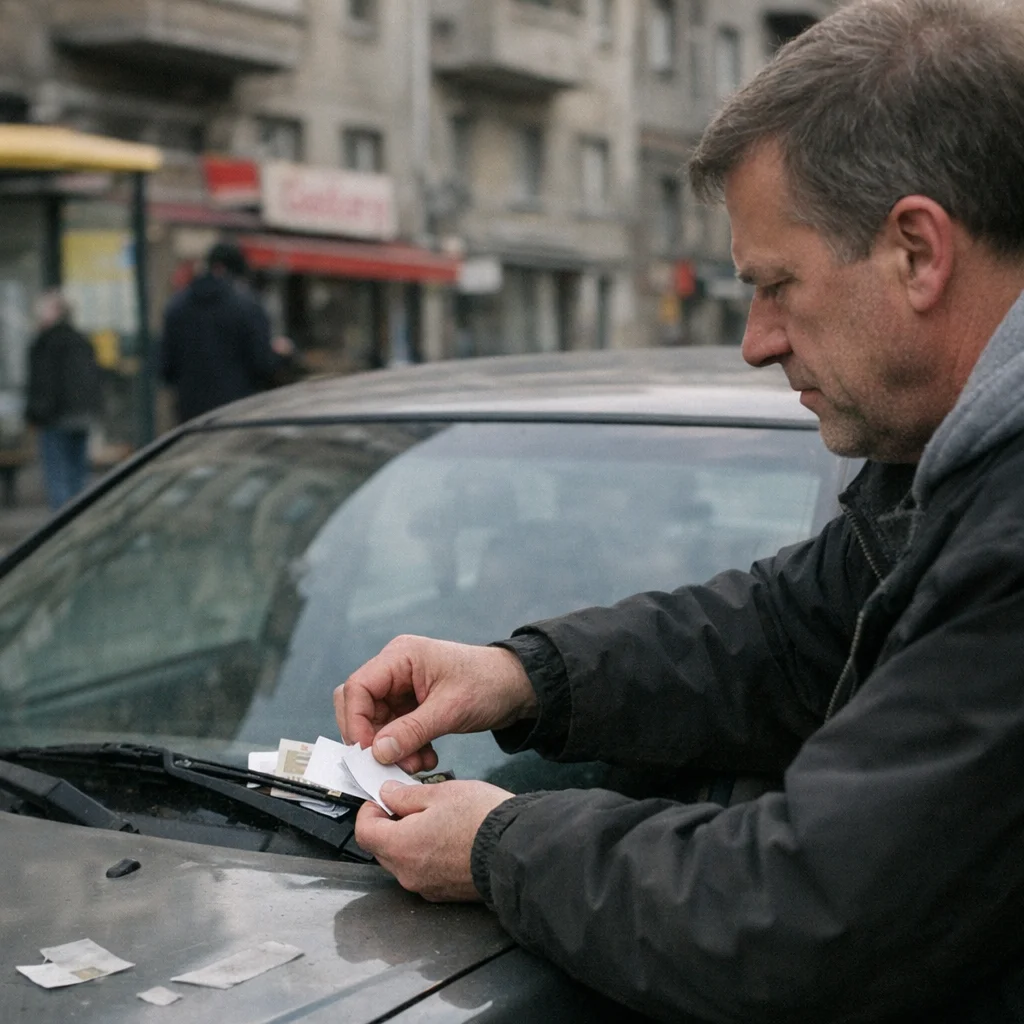
At the curb in Wedding and Gesundbrunnen, the card lurks under windshield wipers like a greasy little subpoena: We buy your car. It sticks itself to lamp posts, bakery shutters, tram stops, pharmacy doors, and the narrow, sweating gap between civic virtue and a parking ticket. By Tuesday morning, residents are peeling them off with the disgust usually reserved for a district-office memo explaining why nothing can be done, except in theory.
The men dropping them off are not offering a service so much as performing an open-air confession booth for the city’s exhausted middle. The fake-green landlord sees a reminder that his “energy-efficient” renovation still depends on tenants too broke to move. The overworked driver sees a threat to his last scrap of dignity, parked beside the curb like a bad decision with four wheels. And the district’s boutique anti-capitalists, who lecture about extraction while leasing a cargo bike, hate the cards most because they recognize the family resemblance: same hustle, better font, less shame.
"It is basically a roaming guilt machine," said Mehmet Yildiz, who runs a repair shop near Leopoldplatz and requested anonymity because his cousin is in the trade and his mother still thinks he is a part-time poet. "People read it as an insult. Then they call the number anyway, usually after a failed inspection, a breakup, or a rent hike that arrived with a smile. That is when the card has already won."
The pitch is intentionally ugly in the most honest way. No glossy showroom, no stable office, no reassuring human face with a checked shirt and a dead shark smile. Just a mobile number, a promise of fast cash, and the emotional undertow of someone leaning close enough to smell the fear in your coat. It is the administrative equivalent of being seduced in a stairwell: quick, a little humiliating, and somehow framed as a favor.
That bluntness is what makes the cards work. In a city of polished self-branding and municipal perfume, they are almost refreshingly vulgar about the blood type of the transaction. They do not pretend to be sustainable, local, or community-minded. They are not a "dialogue." They are a damp hand on the small of the back saying: your car is tired, your life is overbooked, and somebody else would like to monetize both before you remember you have principles.
A spokeswoman for the district office said there is no special permit required for distributing business cards in public spaces, though littering enforcement remains "selective in practice," which is bureaucratic for: we will fine a pensioner for a stray sack of leaves, but a van full of entrepreneurial grime can breed in peace if it promises to stay mobile. BVG, for its part, said unauthorized advertising on bus shelters creates "additional cleaning burdens," a phrase so polished it could have been drafted by a procurement committee after three espressos and a donor meeting. Berlin loves cleanliness language the way pimps love a church brochure: a soft cover for hard handling.
And so the cards keep coming, because the city’s moral order is a vending machine with a jammed coin slot. They will keep arriving under wipers, in door seams, beside kebab wrappers, and in all the places where public space is treated like a digestive tract. In Wedding, they are already part of the decor: small, square parasites waiting for the moment when a driver decides that dignity, like an old Opel and a district promise, is something you can trade in for cash and call it adulthood.