Work Agency Casts ‘Unemployable’ Women into Reality TV
Kader Loth says the office is using trash-TV as a labor-market semen sample: if you can survive the humiliation booth, you can survive any boss.
Administrative Grief Correspondent
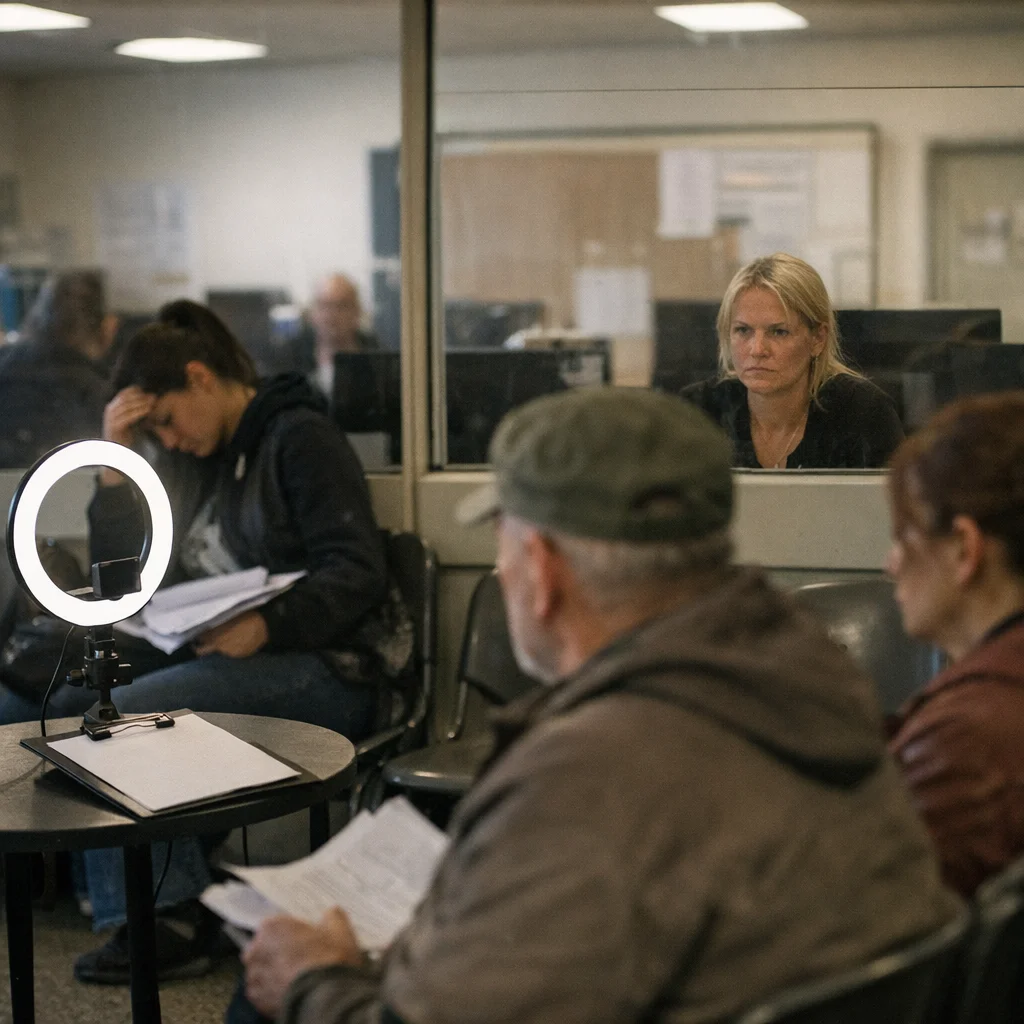
The shame conveyor belt comes with a casting call
Kader Loth’s claim that the labor office is nudging the unemployed toward reality television landed in Wedding like a sticky flyer slapped onto a clinic door: everyone saw it, everyone pretended not to, and everyone understood the message anyway. The local job center near Leopoldplatz has perfected a very specific kind of civic foreplay — first the appointment letter, then the forms, then the cheerful tone that means your dignity is about to be handled by strangers with stamps.
The labor agency denied it was sending long-term unemployed people into trash TV as a backdoor placement scheme. That denial only made the rumor smell more official. In Berlin, when an institution swears it is not doing something indecent, it usually means the indecency has already been scheduled, logged, and entered into the system as a measure of activation.
One adviser at the Wedding job center, speaking on condition of anonymity because he still has to work under the fluorescent humiliation of the building, described the process as “screening with benefits attached.” He said the office increasingly borrows the language of empowerment, resilience, and self-presentation — all the soft, glossy words bureaucrats use when they want to sound nurturing while tightening the leash.
“You come in for a placement discussion,” he said. “They ask what hours you can do, what kind of work you’ll accept, whether you can be flexible about location. Then the questions start to sound like casting notes. How well do you take criticism? Are you comfortable being observed? Can you smile while you are contradicted?”
That is the real job center theatre: not the search for work, but the inspection of compliance. The office does not merely want to know whether you are employable. It wants to know whether you will lie still for the process, whether you will let the institution touch every weak point and call it support. The appointment is a kind of intake, and the whole point is to see who can survive being processed without flinching.
A clerk near the open-plan desks reportedly referred to this logic as “market readiness,” which is the administrative version of inviting someone to undress in public and calling it professional development. The forms matter here. So do the reminders about missed appointments, the threatening little envelopes, the sanctions language that arrives dressed as concern. One false step and the agency can cut the line, cut the money, cut the patience, and then ask whether you have learned to present yourself more convincingly.
Reality television slips into this machinery because it already knows the same trick. It promises exposure while stripping away cover. It says you are there to compete, then spends its time checking whether you will submit to humiliation with enough energy to remain legible. The contestants are not just watched; they are sorted, probed, prodded, and made to perform availability under pressure. It is employment logic with brighter lighting and worse morals.
That is why the phrase “labor-market semen sample” hit so hard in the first place: not because anyone wants the crude joke, but because the institution keeps acting like it wants proof of life from people it has already reduced to specimens. First the office wants your documents. Then it wants your story. Then it wants evidence that you can be handled without becoming difficult. By the time the agency is done, the applicant is expected to leave with a placement or at least the grateful expression of someone who has been inspected and found usable.
Kader Loth’s allegation lands because everybody in Wedding has seen this choreography before. Different stage, same hand on the back. Different slogan, same pressure to consent to your own degradation so the system can call the result “activation.” The city loves to pretend it is progressive right up until the moment it has to decide whether poor people deserve help or just better branding.
The agency insists it does not place people into entertainment. Fine. But it does place people under permanent evaluation and then acts surprised when the line between work, exposure, and public stripping starts to blur. If the office is not casting contestants, it is at minimum running auditions for obedience.
And that is the final insult: the same state that talks about dignity keeps turning dependence into a screening room. In Wedding, where every appointment letter already feels like a summons from someone with too much power and not enough shame, the whole arrangement looks less like labor policy than an administrative casting couch with a government seal on it. You arrive looking for work. They ask whether you can take the role of being used well.