Xi Gets the Front Door; Press Gets Body-Searched
Trump welcomed Xi Jinping like a prized client and treated American reporters like trespassers.
Moral Contradictions & Night-After Reporting
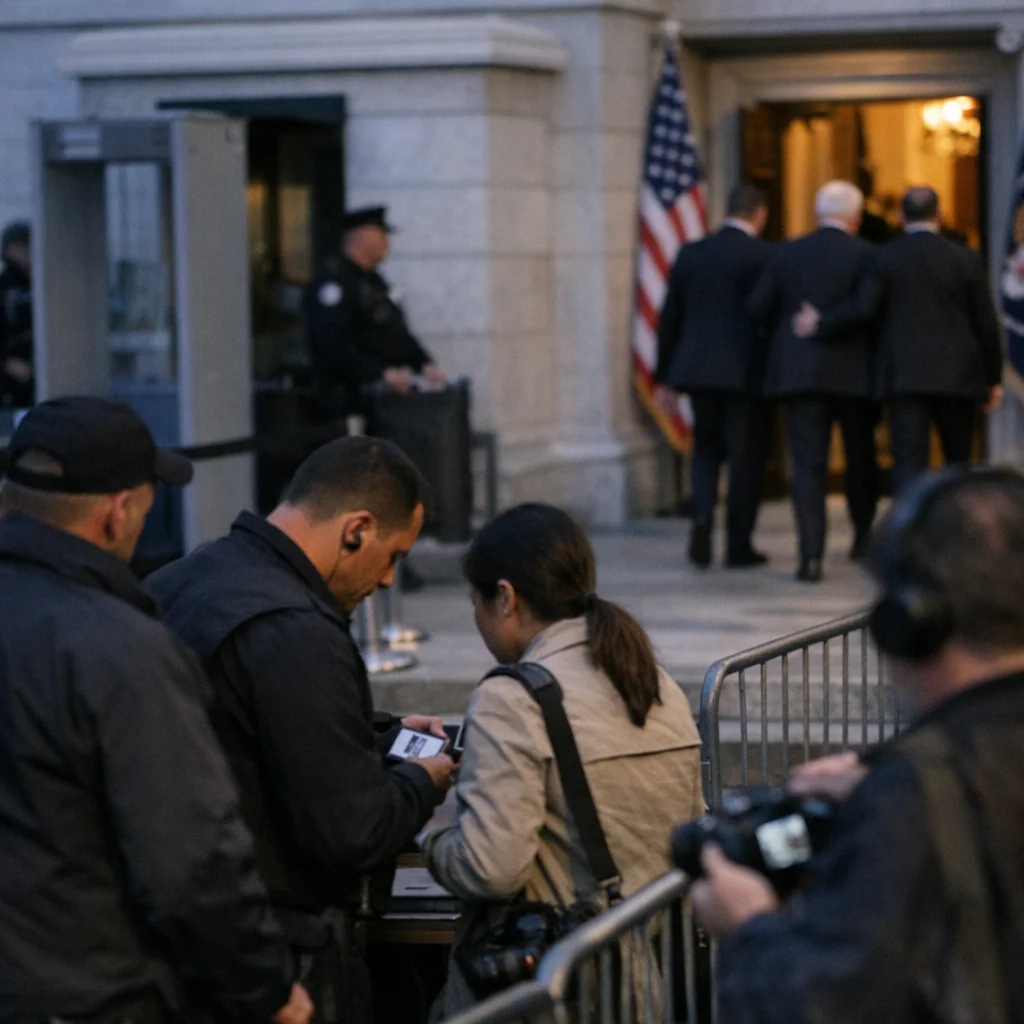
At the White House, Xi Got the Front Door
The White House greeted China’s leader like a billionaire client with a locked app and treated American reporters like men being patted down before they’re allowed to watch the room breathe. In Wedding, where every polished doorway eventually reveals a hand on the back of your neck, the arrangement was instantly legible: power was not merely deciding who entered, but who got felt up by procedure first.
By early afternoon, the protocol had the sweaty confidence of a private club that knows the city will forgive anything if it hangs enough flags over the entrance. Xi Jinping was guided through the front door, the flattering one, the one designed for people who are meant to be seen arriving and not reminded that history has teeth. The press, meanwhile, were steered toward the side access, where clearance was checked, badges were inspected, and the language of “screening” did the old administrative trick of pretending humiliation was sanitation.
No one said body search out loud, of course. They said “credential review,” “access control,” and “orderly movement,” the way bureaucrats always do when they want a frisk to sound like a favor. But the choreography was blunt enough. One man got the entrance, the escort, the private room. The others got asked to wait outside, stand in line, and accept that the building had decided who would be touched by the event and who would only be allowed to read about it later.
“Once you start sorting journalists like this, you are not managing space anymore, you are managing obedience,” said Deniz Yilmaz, who runs a café near Leopoldplatz and has seen enough polished authority to know when it is using manners as a blindfold. “They call it clearance because ‘submission’ would sound too honest for the clipboard.”
American reporters responded with the sour, injured indignation of people who have built entire careers on being close to power and then discovered power prefers a cleaner mouth. A few protested the principle. Most looked like men realizing that their usual currency—access, tone, proximity, the little shoulder rub of official favor—had just been replaced by a line, a badge check, and a visible instruction to keep their hands where the staff could see them.
Across Wedding, that part of the ritual is old news. The neighborhood knows the species: the landlord who says he is not excluding you, just “managing entry”; the consultant who calls it “guest flow”; the institution that opens the front door for one class of visitor and makes everyone else wait in the vestibule with their dignity folded into a lanyard. The White House only adds the national seal and the favorite American fantasy that if you say protocol enough times, the grope becomes prestige.
A spokesperson defended the setup as “necessary” and “orderly,” which in Washington is usually the moment a room starts looking for its coat. The administration wanted the optics of a controlled evening: the dignitary received, the cameras positioned, the questions softened, the wrong bodies kept just far enough away to avoid contamination by reality. It is the same old aristocratic trick dressed in democratic vocabulary—invite the press to witness power, then make sure power has already chosen who gets the good hand and who gets the pat-down.
What made the scene uglier was how willing everyone was to play along. The officials performed innocence with the dead-eyed professionalism of people who know every boundary has a price if you phrase the trespass as procedure. The reporters, meanwhile, did that familiar civic striptease of protest: notes filed, faces tight, objections quoted, and then everyone back to waiting for the sanitized recap from the room they were barred from entering.
By evening, the whole thing had resolved into the oldest arrangement in Washington: one leader ushered through the front door like he owned the furniture, the press left outside being told to hold still for inspection, and the state explaining the humiliation in a tone meant to sound like housekeeping. Somewhere behind the polished glass, Xi got the ceremonial handling. Somewhere in the corridor, American journalism learned again that access is never neutral; it is just the hand that decides who gets in and who gets searched first.